May 31, 2006

Chinua Achebe's "Things Fall Apart"


Things fall apart at various levels in Chinua Achebe's novel 'Things Fall Apart'.

A very powerful story that thematically crosses chronological and national boundaries. Set in Africa, amid the Umuofia clan of the Igbo tribe, the novel lays bare the catastrophic impact of British Colonialism on the ancient culture of the Igbo tribe.

Okonkwo the chief protagonist embodies the passion, the courage, the wisdom, the loyalty, and the machismo of his people. He's a staunch follower of his culture and will not let anything or anyone stand in his way of following it, not even his own blood. Achebe focuses on the Igbo culture by his vivid portrayal of their daily life as also their ritualistic observances.

This novel, though written way back in 1959, still features on the reading list of many academic institutes across the country. It is the underlying theme of this piece; the impact of imposing foreign values on a people who were otherwise living out a lifestyle they were comfortable with, that lends such universality and current day relevance to the novel. A theme that has been reenacted innumerable times in history, and is at this very moment being enacted in Iraq where the western world is trying to establish a form of government the Iraqis are not ready for; a foreign people deciding what is right for a people and a land that is completely alien to them and one they've never lived within! History has many examples of intrusions and occupations by colonists who believed theirs was the 'civilized' way and took it upon themselves to teach and change the natives, 'savages', of various nations to their way of living. In retrospect, it is the colonists that appear narrow visioned, intolerant, and less adaptable as compared to the natives of the lands the colonists occupied, and eventually destroyed, by calculatedly wiping out the native cultures of the local inhabitants.

Achebe's novel is powerful due to its simple and direct presentation of the collateral damage that colonialism brought to both the occupier and the occupied; the occupied who was deprived of an age old culture and his independent lifestyle, and the occupier who was transformed into a racist being with a unilateral vision of civilization.

May 22, 2006

'Everything is Illuminated'


A delightful movie set in Ukraine that reminded me of the award winning movie " Life is Beautiful' by Roberto Benini. The humorous and the sombre are beautifully woven together in a setting almost pastoral. The story revolves around a young Jewish American, Jonathan, who travels to Ukraine in search of a woman who had befriended his grandfather during World War II and had helped his grandfather escape to the USA. Jonathan has a compulsive need to collect random items as memorablia for remembering people/ things/ incidents that he is afraid he'd otherwise forget. It is comical to see Jonathan pulling out ziplock bags with an ease and the elan of a check out clerk in a grocery store. Then there is Alex, Jonathan's young translator, who loves America and everything American, but speaks English that comes straight out of a thesaurus and that makes for some really funny dialogues. Alex's gandfather, the third in the trio and also the driver of the car they are travelling in claims to be partially blind and thus has an additional passenger in the car: a 'crazy''see' bitch.

The journey they undertake is laden with grave and sinister undertones, but the interaction of this foursome in the antiquated car makes for some great humor and the viewer every now and again forgets the sombre nature of Jonathan's mission until the plot intervenes. The plot, though serious, is not maudlin and the events can therefore be chewed upon before being swallowed.

The movie makes for some good comedy even while it brings forth some harsh truths about life during the Holocaust. It is about illuminating a past, in the light of which not only do the present day relationships get enlightened but even the future looks a lot brighter.

May 17, 2006

Ayaan Hirsi Ali, Dr. Wafa Sultan; two other Mukhtaran's in the making?


As if Mukhtaran Bibi's ordeals were not enough, here are two others:

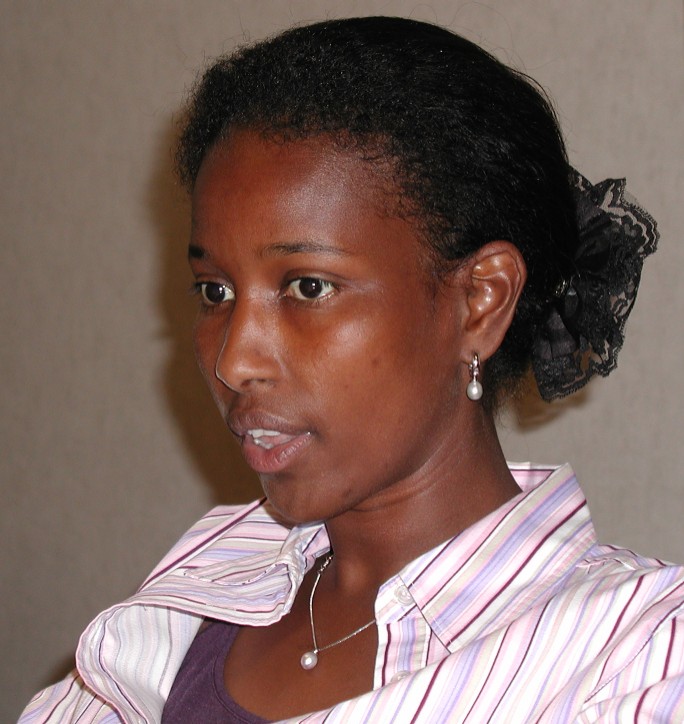
Ayaan Hirsi Ali, a 'wanna be' Dutch national speaks out strongly against Islam and its treatment of women. However, her case is very different from Mukhtaran's in that Mukhtaran lives in Pakistan where Islam is the state religion whereas Ayaan lives in the Netherlands where she constitutes the minority, and where she is also a Member of Parliament. What makes Ayaan's case different has been articulated brilliantly by SR on his blog titled " Ayaan Hirsi Ali - Human Rights versus Tolerance"


Dr. Wafa Sultan, a Syrian American residing in California is yet another brave soul who stands undaunted in the face of the recent Fatwa that has been issued against her because of her views on radical Islam. She is another Ayaan who, while speaking on Al Jazeera, said, "Only the Muslims defend their beliefs by burning down churches, killing people and destroying embassies. This path will not yield any results. The Muslims must ask themselves what they can do for humankind, before they demand that humankind respect them."

Mukhtaran, Wafa Sultan, and Ayaan Hirsi Ali; all three wish to be heard and want their cause to be addressed. Yet each one is perceived differently by us, the public. Mukhtaran's passive resistance hits a sympathetic chord, unanimously; Sultan's vocal protest brings an admiring cheer from most; and Ayaan's proactive resistance accords her just a hearing, and that too by only a few.

May 11, 2006

Heil hypocrisy! Heil religion!


I happened to read this interesting post about the brewing crisis over Iran's growing nuclear capability. The supercilious and hypocritical stance of some western countries on the issue of nuclear proliferation is laid bare. What goes for one, ought to go for all; else we are regressing to some of us being 'more equal than others'. The ban on nuclear weapons must apply to all nations regardless of their status, developing or developed.

On a similar note... what is with current day politicians, especially heads-of-state spouting religious quotes to negotiate political standoffs. Is that now the sole means to negotiate peace and understanding among world leaders of today? Whatever happened to logic, international diplomacy, political strategy that we find ourselves relying on religion to find solutions to a situation such as the standoff with Iran. President Ahmedinijad's letter to President Bush is one fine example of present day world leaders' increasing dependency on religion.

Update: A different perspective on the crisis

May 04, 2006

Pittance as Penalty for Plagiarism!


Story from BBC NEWS:
"The head of one of America's largest defence firms has lost out on his annual pay rise following accusations of plagiarism....Raytheon's board has cancelled William Swanson's 2006 increase after a management guide he wrote was found to include parts of an earlier book...His pamphlet "Unwritten Rules of Management" was discovered to include passages from a 1944 publication... The decision to withhold Mr Swanson's annual pay rise and reduce his potential 2006 stock options by 20% was made by the Raytheon board".

"In 2005, Mr Swanson received a basic salary of $1.1m (£597,000) plus a $2.6m bonus.
He also received 75,000 restricted Raytheon shares, worth $3.37m at the current stock price".

"Raytheon, the world's fifth largest defence company, is best known for making the Tomahawk cruise missile".


That is a pittance in remuneration for the misdeed committed, and by whom! The CEO of the fifth largest defence company, a role model to many, and surely one with a daunting resume brimming over with degrees from prestigious institutes of learning, what would have made him resort to these cheap tactics? Swanson could just as well have hired someone to do it! Did he really believe he wouldn't be caught, or was it plain and simple oversight and therefore unintentional? Were his writing skills in doubt that he had to prove himself, or was he an aspiring writer and this his covert maiden venture? Was the 'management guide' up for sale, and the profits from it worth a fortune? Being who he is, what made Swanson do what he did?

Furthermore how does Swanson get off the hook so easily? How come there isn't much furore over this copying? Is plagiarism less of a crime in corporate america than it is in academia? Is Vishwananthan, a 19 year old student at Harvard, expected to be more cognizant about plagiarism than the CEO of a multinational company who draws a few millions as annual earning? Will Swanson, the CEO of Raytheon, lose as much personl credibility due to this misdemeanour as did Kaavya, the 19 year old student at Harvard? Will both these violations be weighed in the same pan of justice, or do different rules apply?

If different rules apply, then why?

April 27, 2006

'Kaavya' gone sour?


I wonder if Kaavya Vishwanathan's current problems have to do with the fact that she is an Indian born to Brahmin parents living in the USA?


Young author admits borrowing passages

By Hillel Italie, AP National Writer April 24, 2006

NEW YORK --A Harvard University sophomore with a highly publicized first novel acknowledged Monday that she had borrowed material, accidentally, from another author's work and promised to change her book for future editions.

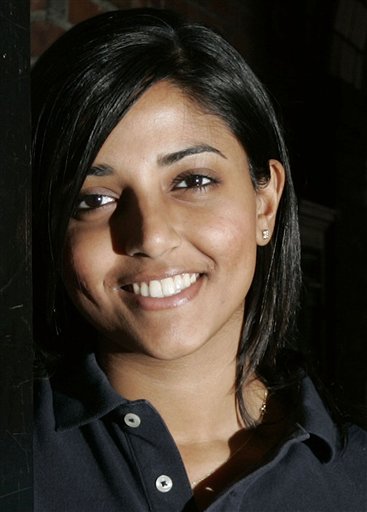
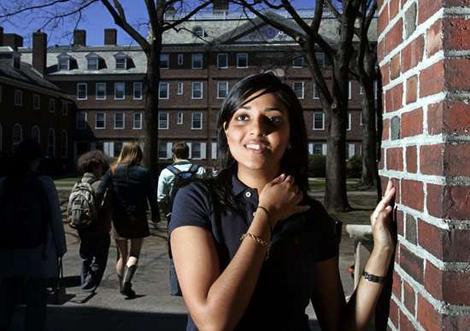
Kaavya Viswanathan's "How Opal Mehta Got Kissed, Got Wild, and Got a Life," published in March by Little, Brown and Company, was the first of a two-book deal reportedly worth six figures. But on Sunday, the Harvard Crimson cited seven passages in Viswanathan's book that closely resemble the style and language of the novels of Megan McCafferty.

"When I was in high school, I read and loved two wonderful novels by Megan McCafferty, `Sloppy Firsts' and `Second Helpings,' which spoke to me in a way few other books did. Recently, I was very surprised and upset to learn that there are similarities between some passages in my novel ... and passages in these books," Viswanathan, 19, said in a statement issued by her publisher.

"While the central stories of my book and hers are completely different, I wasn't aware of how much I may have internalized Ms. McCafferty's words. I am a huge fan of her work and can honestly say that any phrasing similarities between her works and mine were completely unintentional and unconscious. My publisher and I plan to revise my novel for future printings to eliminate any inappropriate similarities.

"I sincerely apologize to Megan McCafferty and to any who feel they have been misled by these unintentional errors on my part."

The book had a first printing of 100,000 copies.

Little, Brown publisher Michael Pietsch told The Associated Press on Monday that he did not think Viswanathan's borrowings were caused by the pressures of being both a student and an author.

Pietsch also declined to blame Viswanathan's collaboration with 17th Street Productions Inc., a book packager that specializes in teen narratives and helped her develop the story.

"Every word in that book was written by her, for better or for worse," he said, adding that work on a new edition would begin "tomorrow."

Viswanathan, who was 17 when she signed her contract with Little, Brown, is the youngest author signed by the publisher in decades. DreamWorks has already acquired the movie rights to her first book.

Viswanathan's novel tells the story of Opal, a hard-driving teen from New Jersey who earns straight A's in high school but who gets rejected from Harvard because she forgot to have a social life. Opal's father concocts a plan code-named HOWGAL (How Opal Will Get A Life) to get her past the admission's office.

McCafferty's books follow a heroine named Jessica, a New Jersey girl who excels in high school but struggles with her identity and longs for a boyfriend. McCafferty is a former editor at Cosmopolitan who has written three novels.

------

Associated Press Writer Andrew Ryan contributed to this story.
© Copyright 2005 The New York Times Company

April 24, 2006

Defying Definition!


Can I call you a friend?
Because you’ll listen
to my ravings and ranting,
however inane
Because you’ll hear
the sorry unsaid.

Will I call you a friend?
Because you don’t see
my philanderings;
innumerable may be.
Because you don’t look
for those promises unkept;
that lack of sensitivity.

May I call you a friend?
Because you matter;
though senselessness pervades.
And I look around for you.
Because you’re the hold
while life rushes out from under my feet.