June 29, 2006

Acceptable inequities or violations?


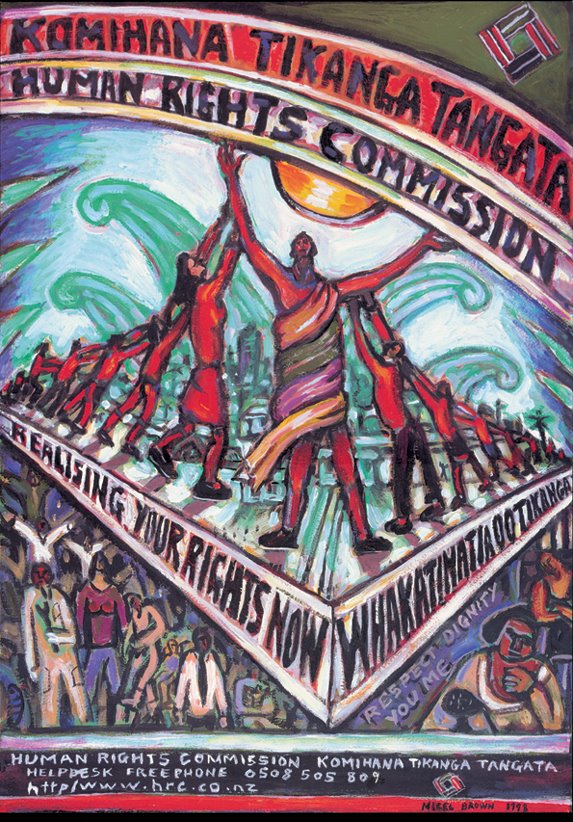
In a world so economically disparate as ours, how can basic human rights be equitable. What would be termed a violation in one nation may be more than acceptable in another. To give an example: a 15 year old in China may be stuffing toys in a 10 x 15 room along with ten other boys, and be thankful for it since it provides a square meal for his family that would otherwise starve. A 16 year old in Ukraine may decide to be a part of the flesh trade as a way out of her impoverished and hopeless situation. In either of the two cases the apparent victim does not perceive himself as one. In fact he is simply exercising his/her natural instinct of survival at all costs. That the cost appears high to a person or persons of stable and flourishing economies in developed nations, is no surprise. However, what is surprising is that it is these persons in developed nations and flourishing economies that have the upper hand in determining the rubric for what entails a human right violation. The UN Human Rights Commission sits various countries that have defined powers, but it is the western nations that hold the vote primarily as member nations, others like Iran are but mere observers. The current controversy surrounding Mortazavi's inclusion in the Iranian Delegation to the UN Human Rights Conference has raised red flags in most of the rich western nations including the USA; understandably so, given his much publicized wrongdoings, especially the one involving a Canadian photo journalist. However, it is not so clear to me how and why Mortazavi can be prevented from attending the conference. Afterall he is one of many appointed by his country to represent it at the conference. Furthermore, isn't it true that the viability of any proposition is only strengthened when the proposition is fairly debated with ample representation on either side. So then if a Mortazavi does in fact accompany the Iranian delegation (even if only as part of the audience) the Human Rights conference stands to gain more credence.

Defining Human Rights on a world wide basis is no easy job. The UN Human Rights Commission, obviously cognizant of that, tries to get a balanced representation from nations around the world, only some of who are members while others are observers. But mere representation will not suffice, because countries deemed in violation of Human Rights are now unlikely to become members or even observers of the Commission, as explained in the previous link. Given this scenario, what are the chances that a North Korea will get a fair hearing on its apparent Human Right violation issue in the upcoming session...

June 21, 2006

Could I referee this one?

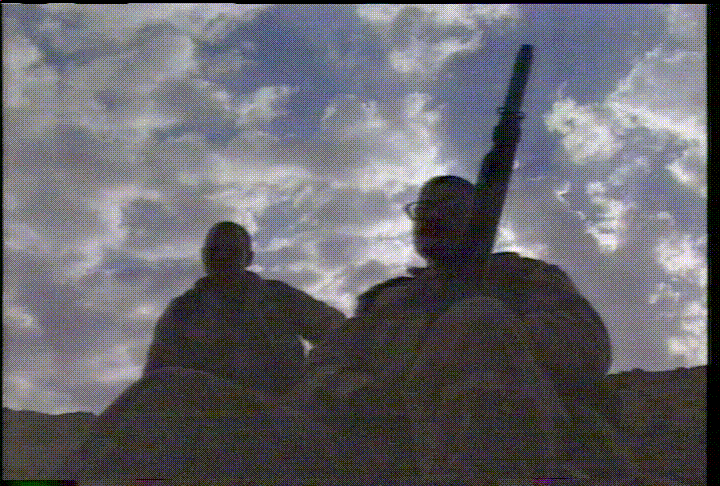
In the midst of all the euphoria of the Soccer World Cup, the news about the gruesome killing of the two twenty year old American soldiers in Iraq dampened my spirit in a big way. What made it worse was that when I read this bone chilling news in the NY Times, on that very page, there was a news item about three other US soldiers being charged for the murder and ill-treatment of Iraqi soldiers in Guantanamo Bay. Is this fair play?

The juxtaposing of these two news items captured the dilemma that raged within me. Is human right violation to be condoned? Certainly not, and thus I disprove what happened to Iraqi prisoners in Guantanamo Bay. On the same note, are barbaric atrocities to be meekly accepted and ignored? I would hope not! The guilty need to be taken to task at the earliest and they should be held accountable for their actions. So in fact if a fellow soldier from the contingent to which the two dead marines belonged, were to take measures to punish the wrongdoers, he’d be justified… or would he?

I’m not sure how I should react. Rationally, an eye for an eye would do more damage and bring endless suffering. However, at this point my rational self is practically non existent, and understandably so. I am mad about the way in which the two soldiers were killed, and at this moment, if compatriots of those killed were to do something reactionary, like what happened in Haditha, I wouldn’t hesitate to condone their actions. But that may change with passage of time; as the heat dies down and my rational self reasserts itself.

It's the heated insanity of the moment that often makes even the calmest of people take strange and extreme action; a result of the raging anger within, that seeks vent after a barbaric crime is committed against ones own. Do these extreme actions warrant a red card? Could the Haditha killings be regarded as an extreme action taken under extreme emotional duress? Would anyone want to referee that?

June 09, 2006

'My Invented Country'


Memory and nostalgia can create beauty unimagined and unlived, and Isabel Allende’s novel ‘My Invented Country’ does that and more. She takes you into her throes of reminiscence and creates picturesque landscapes and vivid characters woven together in a memorable journey into her Chilean past.

The novel is a memoir of Isabel who is sharing her nostalgia about Chile, her homeland, and creating her very own Chile, her ‘invented country’, in her own mind; one that she left so many years ago to escape the atrocities of the Pinochet regime. The exposition is direct yet haunting and sets the reader on a voyage he cannot want out of. He comes out of it wondering about his own invented country; whether he has one and if it shares any commonalities with Isabel’s. The wondering doesn’t stop at that personal level. The reader, especially one who is an immigrant, wonders whether every immigrant carries an invented country in his heart, and if he does, then in fact, there are so many of us who carry this beautiful burden. Why do we all carry it? Why is it beautiful that we hold it so dear, and never want to part with it? Yet, why is it a burden that relegates itself to the mind? Does this burden, this invented country, ever disappear, get replaced, or suffer ruin? Why are the memories of a lost home so tantalizing? Is it because as exiles or immigrants we never really find our promised land, or even if we do, it always falls short of the home we left behind.

‘My Invented Country’ is a delightful read that satiates the senses through some colorful and frisky language. Its reminiscing tone soothes, yet, once you close the book, there's a spring of turbulent introspection let loose within the mind of the reader.

May 31, 2006

Chinua Achebe's "Things Fall Apart"


Things fall apart at various levels in Chinua Achebe's novel 'Things Fall Apart'.

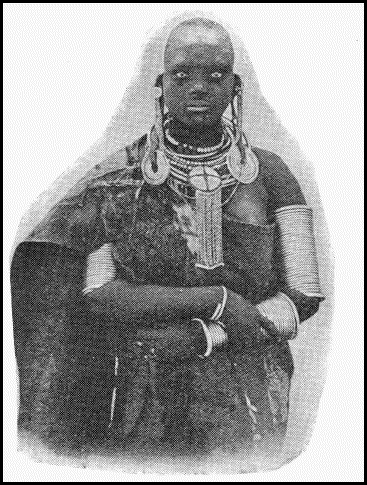
A very powerful story that thematically crosses chronological and national boundaries. Set in Africa, amid the Umuofia clan of the Igbo tribe, the novel lays bare the catastrophic impact of British Colonialism on the ancient culture of the Igbo tribe.

Okonkwo the chief protagonist embodies the passion, the courage, the wisdom, the loyalty, and the machismo of his people. He's a staunch follower of his culture and will not let anything or anyone stand in his way of following it, not even his own blood. Achebe focuses on the Igbo culture by his vivid portrayal of their daily life as also their ritualistic observances.

This novel, though written way back in 1959, still features on the reading list of many academic institutes across the country. It is the underlying theme of this piece; the impact of imposing foreign values on a people who were otherwise living out a lifestyle they were comfortable with, that lends such universality and current day relevance to the novel. A theme that has been reenacted innumerable times in history, and is at this very moment being enacted in Iraq where the western world is trying to establish a form of government the Iraqis are not ready for; a foreign people deciding what is right for a people and a land that is completely alien to them and one they've never lived within! History has many examples of intrusions and occupations by colonists who believed theirs was the 'civilized' way and took it upon themselves to teach and change the natives, 'savages', of various nations to their way of living. In retrospect, it is the colonists that appear narrow visioned, intolerant, and less adaptable as compared to the natives of the lands the colonists occupied, and eventually destroyed, by calculatedly wiping out the native cultures of the local inhabitants.

Achebe's novel is powerful due to its simple and direct presentation of the collateral damage that colonialism brought to both the occupier and the occupied; the occupied who was deprived of an age old culture and his independent lifestyle, and the occupier who was transformed into a racist being with a unilateral vision of civilization.

May 22, 2006

'Everything is Illuminated'


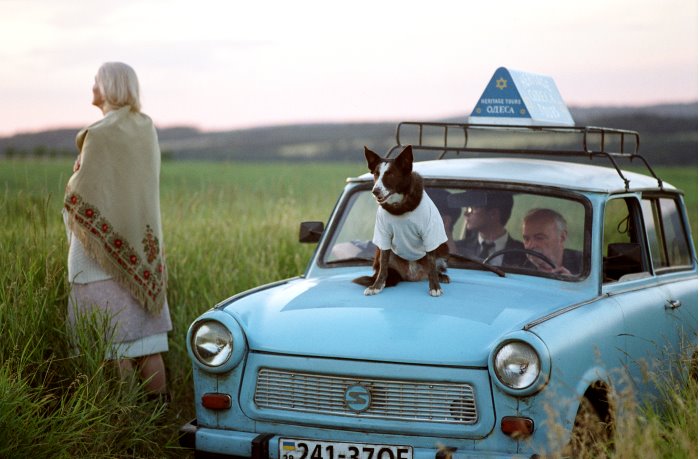
A delightful movie set in Ukraine that reminded me of the award winning movie " Life is Beautiful' by Roberto Benini. The humorous and the sombre are beautifully woven together in a setting almost pastoral. The story revolves around a young Jewish American, Jonathan, who travels to Ukraine in search of a woman who had befriended his grandfather during World War II and had helped his grandfather escape to the USA. Jonathan has a compulsive need to collect random items as memorablia for remembering people/ things/ incidents that he is afraid he'd otherwise forget. It is comical to see Jonathan pulling out ziplock bags with an ease and the elan of a check out clerk in a grocery store. Then there is Alex, Jonathan's young translator, who loves America and everything American, but speaks English that comes straight out of a thesaurus and that makes for some really funny dialogues. Alex's gandfather, the third in the trio and also the driver of the car they are travelling in claims to be partially blind and thus has an additional passenger in the car: a 'crazy''see' bitch.

The journey they undertake is laden with grave and sinister undertones, but the interaction of this foursome in the antiquated car makes for some great humor and the viewer every now and again forgets the sombre nature of Jonathan's mission until the plot intervenes. The plot, though serious, is not maudlin and the events can therefore be chewed upon before being swallowed.

The movie makes for some good comedy even while it brings forth some harsh truths about life during the Holocaust. It is about illuminating a past, in the light of which not only do the present day relationships get enlightened but even the future looks a lot brighter.

May 17, 2006

Ayaan Hirsi Ali, Dr. Wafa Sultan; two other Mukhtaran's in the making?


As if Mukhtaran Bibi's ordeals were not enough, here are two others:

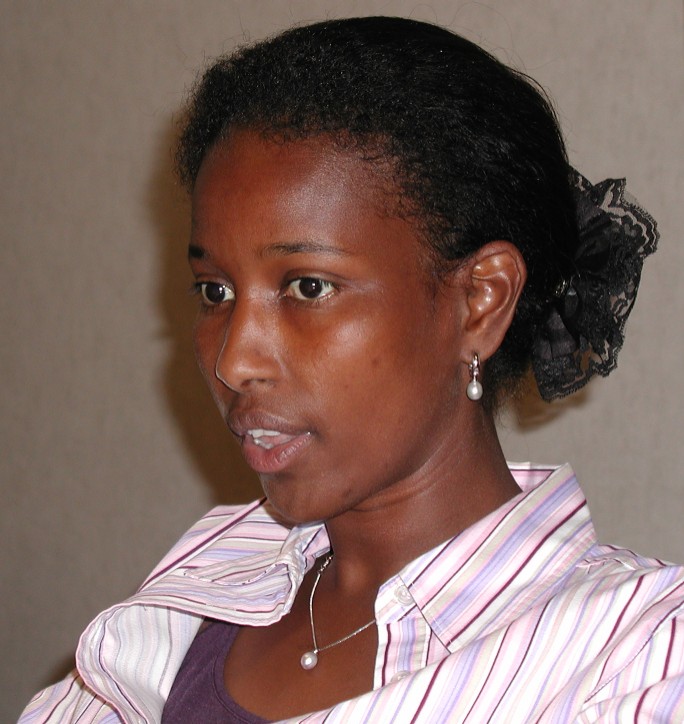
Ayaan Hirsi Ali, a 'wanna be' Dutch national speaks out strongly against Islam and its treatment of women. However, her case is very different from Mukhtaran's in that Mukhtaran lives in Pakistan where Islam is the state religion whereas Ayaan lives in the Netherlands where she constitutes the minority, and where she is also a Member of Parliament. What makes Ayaan's case different has been articulated brilliantly by SR on his blog titled " Ayaan Hirsi Ali - Human Rights versus Tolerance"


Dr. Wafa Sultan, a Syrian American residing in California is yet another brave soul who stands undaunted in the face of the recent Fatwa that has been issued against her because of her views on radical Islam. She is another Ayaan who, while speaking on Al Jazeera, said, "Only the Muslims defend their beliefs by burning down churches, killing people and destroying embassies. This path will not yield any results. The Muslims must ask themselves what they can do for humankind, before they demand that humankind respect them."

Mukhtaran, Wafa Sultan, and Ayaan Hirsi Ali; all three wish to be heard and want their cause to be addressed. Yet each one is perceived differently by us, the public. Mukhtaran's passive resistance hits a sympathetic chord, unanimously; Sultan's vocal protest brings an admiring cheer from most; and Ayaan's proactive resistance accords her just a hearing, and that too by only a few.

May 11, 2006

Heil hypocrisy! Heil religion!


I happened to read this interesting post about the brewing crisis over Iran's growing nuclear capability. The supercilious and hypocritical stance of some western countries on the issue of nuclear proliferation is laid bare. What goes for one, ought to go for all; else we are regressing to some of us being 'more equal than others'. The ban on nuclear weapons must apply to all nations regardless of their status, developing or developed.

On a similar note... what is with current day politicians, especially heads-of-state spouting religious quotes to negotiate political standoffs. Is that now the sole means to negotiate peace and understanding among world leaders of today? Whatever happened to logic, international diplomacy, political strategy that we find ourselves relying on religion to find solutions to a situation such as the standoff with Iran. President Ahmedinijad's letter to President Bush is one fine example of present day world leaders' increasing dependency on religion.

Update: A different perspective on the crisis